
Clinical-grade light therapy that supports collagen production, calms inflammation, and speeds skin recovery — all while you rest. No needles, no downtime, no discomfort.
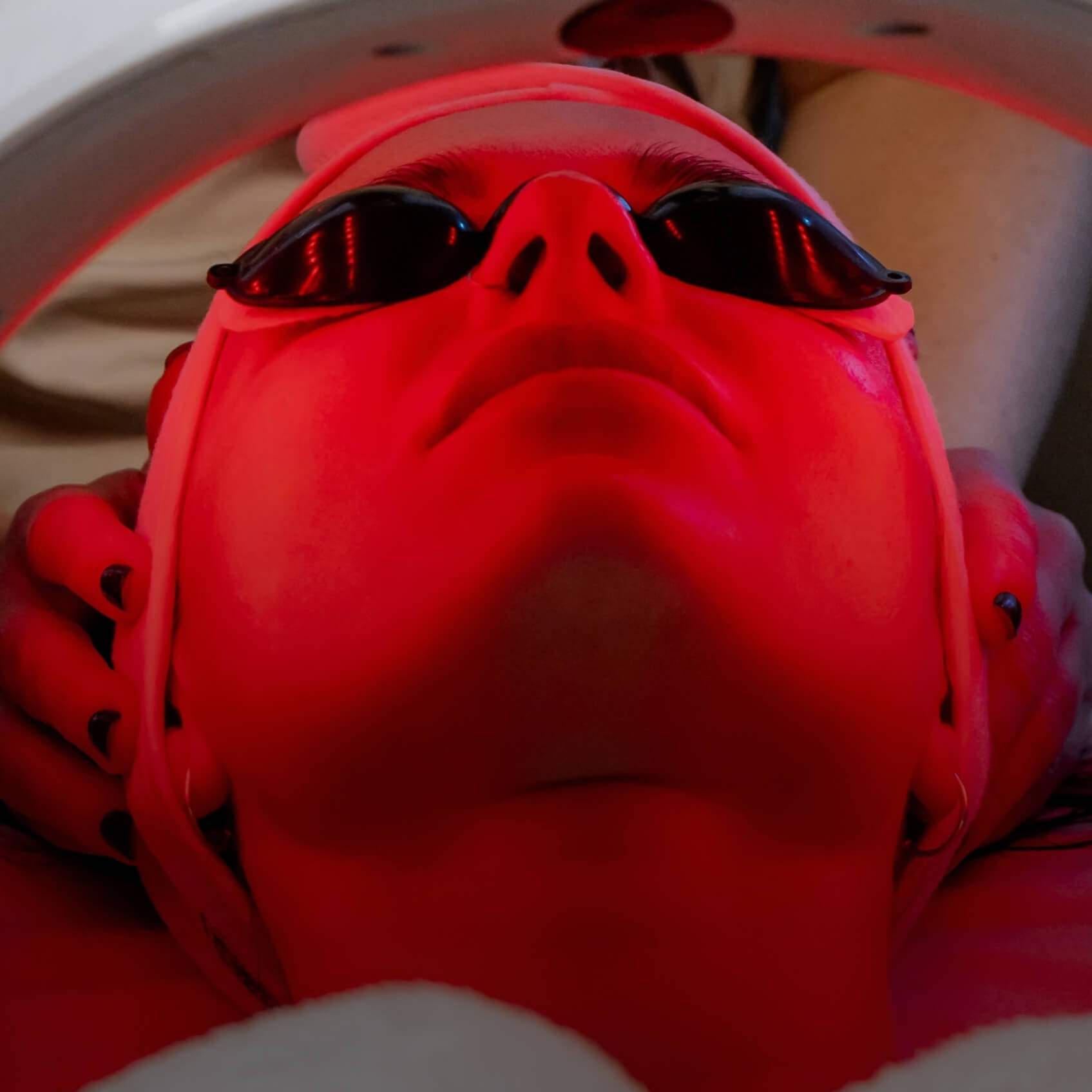
Red light therapy uses specific wavelengths of visible and near-infrared light that skin cells absorb and convert into usable energy. That energy supports the processes your skin already relies on — collagen synthesis, circulation, and cellular repair.
What makes it unusual is how little it asks of you. There's no injury to the skin, no discomfort, and nothing to recover from. You lie under the panel for around 20 minutes and go straight back to your day.
It works well on its own for tone, texture, and redness, but it's particularly valuable alongside other treatments. Used after microneedling, it can help calm the skin and support the healing phase. At AghaSA, we'll build it into your plan where it adds genuine value rather than selling it as a standalone fix.
1
Supports natural collagen production
Red wavelengths stimulate fibroblast activity — the cells responsible for producing collagen — which over a course of sessions can improve firmness and soften the appearance of fine lines.
2
Calms redness and irritation
Its anti-inflammatory effect makes it a good fit for reactive, post-treatment, or generally sensitive skin, helping reduce visible redness and restore a more even tone.
3
Completely non-invasive
No needles, no heat, no peeling, no recovery. One of the few treatments you can have as often as several times a week without stressing the skin.
Choosing a treatment shouldn't feel like guesswork. Here's what most people ask before their first visit — and if your question isn't here, just ask us.
Warm and relaxing, nothing more. You'll wear protective eyewear and lie under the panel for around 20 minutes. Most people find it genuinely restful.
Red light therapy is cumulative rather than instant. Most protocols involve two to three sessions a week for several weeks, followed by maintenance. We'll map out a realistic schedule at your consultation.
Skin often looks calmer and less red early on, but changes in firmness and texture build gradually as collagen develops — typically noticeable somewhere around the eight to twelve week mark with consistent sessions.
Yes. Unlike laser treatments, red light doesn't target pigment, so it carries no risk of pigmentation changes and is considered safe across all skin types and tones.
It pairs well with most things on our menu. It's often used after microneedling to support recovery, and alongside HydraFacial or dermaplaning as part of an ongoing skin plan. We'll sequence it appropriately.